
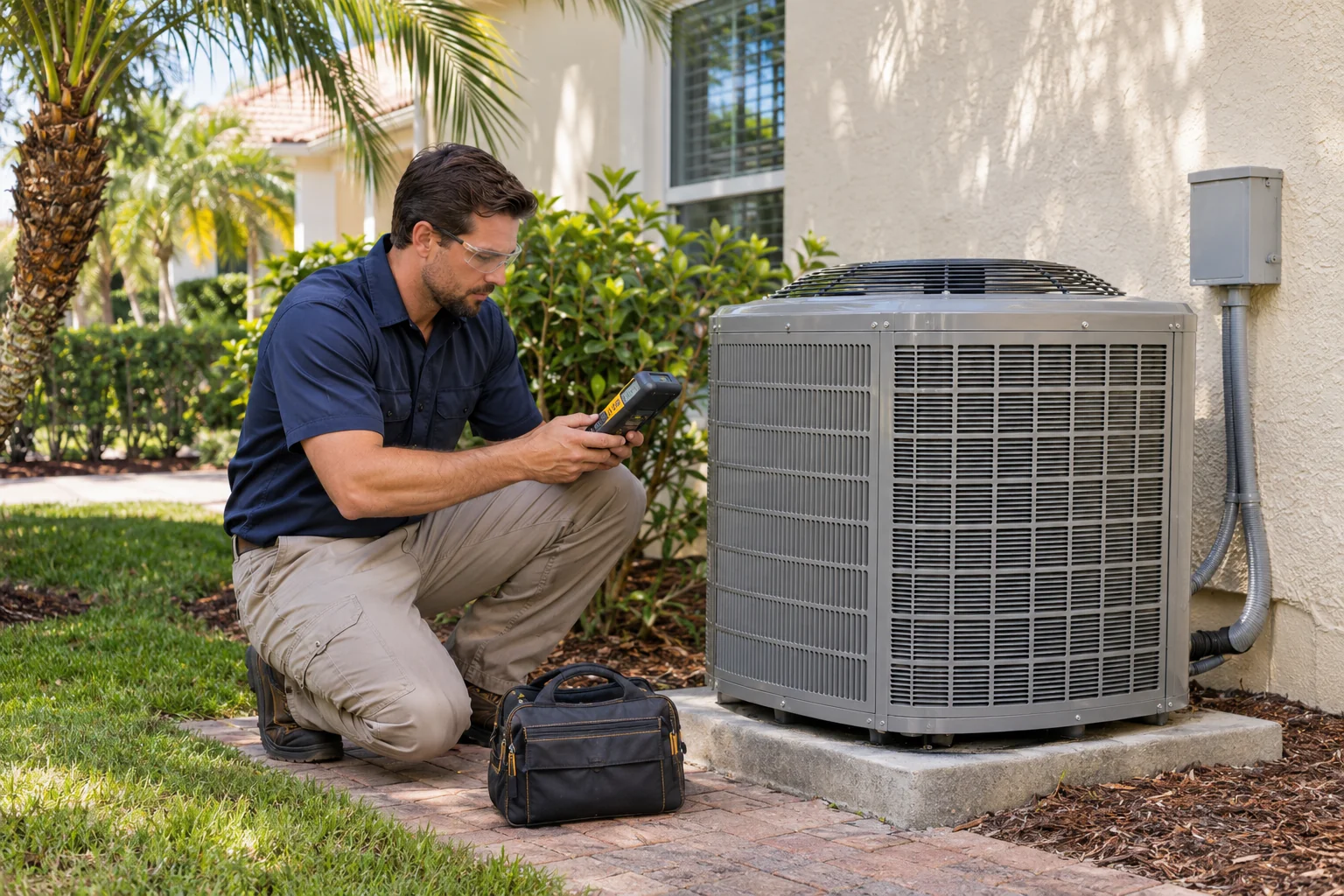




Most of us don’t think much about our air conditioner while it’s working. We change the thermostat, hear the system come on, and go about our day. Maintenance often gets our attention only after the house stops cooling.
But you don’t have to wait for a breakdown to find out how your equipment is doing. A preventive maintenance visit gives us time to inspect your system, check its operation, and explain anything that needs attention.
At Tropical Air of Central Florida, we offer quarterly, twice-yearly, and annual maintenance programs for homes and businesses throughout Greater Orlando and Central Florida. We’ll discuss your equipment and arrange a schedule with you.
What Does This Maintenance Cover?
This maintenance program covers heating and cooling equipment, including applicable heat pump and electric heat components.
Our technicians are also qualified to work with systems that use low-GWP A2L refrigerants. GWP stands for global warming potential. We’ll identify your system’s refrigerant and follow the applicable service procedures.
The checklist includes a visual inspection of accessible ductwork. A full ductwork assessment, duct repairs or replacement, attic insulation, dryer vent cleaning, and commercial refrigeration service are separate from the heating and cooling maintenance described here.
If you need help with those services, let us know when you contact us so we can discuss the work and arrange the appropriate visit.
What Happens During AC Preventive Maintenance?
Maintenance involves more than changing a filter. We check the parts that work together to move air, control temperature, and carry moisture away from your system.
Here’s what we check and service during a maintenance visit. Some items depend on your equipment, its condition, and your maintenance agreement. When you schedule, we’ll explain what your visit includes. If we find something that requires additional work, we’ll discuss it with you before proceeding.
Electrical Components and Controls
Electrical connections and controls help your equipment start, run, and shut off properly. We check:
- Compressor and condenser fan motor amperage—the electrical current the motors draw while running.
- Blower motor amperage and its capacitor, where applicable.
- Start and run capacitors.
- Contactor points.
- Low-voltage connections at the contactor and transformer.
- Electrical connections, wiring, disconnects, and high-voltage connections.
- Thermostat operation.
- Electric heat strip amperage, relays, and overloads, where applicable.
Refrigerant and Cooling Operation
A system can be running without cooling as it should. To assess its operation, we check:
- Refrigerant charge, including subcooling and superheat measurements as appropriate for the system.
- Caps, seals, and connections for signs of leaks.
- The temperature difference between return air entering the system and supply air delivered to your rooms.
- Whether the outdoor condenser unit is level.
Airflow, Filters, and Ductwork
A dirty filter or an airflow problem can affect comfort throughout the building. We:
- Check the filter and replace or wash it as appropriate for the filter type and your maintenance agreement.
- Visually inspect accessible ductwork.
- Check zone dampers and bypass components, if installed.
- Inspect the inside of the equipment cabinet for buildup, growth, or discoloration.
Coils and Outdoor Equipment
The indoor and outdoor coils need attention as part of caring for the system. We:
- Inspect the evaporator coil and discuss any cleaning or treatment needed.
- Rinse the outdoor condenser and condenser coil as appropriate.
- Lubricate bearings where required by the equipment manufacturer.
Drainage and Overflow Protection
Your air conditioner removes moisture while cooling. That water needs a clear path out of the equipment.
We:
- Inspect the drain pan.
- Vacuum and flush the condensate drain line.
- Check the overflow float switch, which is designed to shut the system off if water backs up.
Heat Pump Operation
If your system has a heat pump, we also:
- Check heat pump operation.
- Check the defrost cycle.
What Should You Tell Us?
You live or work with the system every day. Something you’ve noticed may help us understand a problem that isn’t obvious during the visit.
When you schedule, let us know about concerns such as:
- A room that stays warmer or colder than the others.
- A new noise or an unusual smell.
- Longer running times or frequent starts and stops.
- Water around the indoor equipment.
- Changes in airflow or indoor humidity.
- An unexplained increase in energy use.
You don’t need to know the cause. Just describe what has changed and when you first noticed it. That helps us understand whether you’re arranging routine maintenance or need a service visit to investigate a problem.
What Happens After the Inspection?
Before we finish, we’ll go over what we found, explain anything that needs attention, and answer your questions.
If we recommend additional work, we’ll explain what it involves and whether it is included in your maintenance agreement. You should understand what your maintenance visit covered and what would be a separate repair or service.
Preventive maintenance cannot prevent every breakdown. It can, however, help you understand your equipment’s condition and make decisions before a developing issue becomes an unexpected interruption.
How Often Should Your System Be Maintained?
The right schedule depends on the equipment, how much it runs, its operating environment, and the manufacturer’s guidance.
We offer quarterly, twice-yearly, and annual maintenance options. We’ll talk with you about your system, your concerns, and a schedule that fits your home or business.
For commercial properties, including banks, let us know about operating hours, building access requirements, and any restrictions on when work can take place. We’ll discuss those requirements with you when arranging the maintenance schedule.
Arrange Preventive Maintenance
If you can’t remember when your system was last serviced, or you’d like to discuss a maintenance program, contact us at Tropical Air of Central Florida.
You’ll find our contact information in the footer at the bottom of every page.
0 Comments